

EdTech
Atomic
What if a university could compete with YouTube and ChatGPT as the place the world goes to learn?
The Challenge
People increasingly learn from YouTube and ChatGPT. Those tools are instant, on demand, and shaped around the learner. They share one fatal weakness. They cannot prove where their answers come from. A general AI model draws on open-internet training data of unknown quality, so it can sound authoritative even when it's wrong, and it can never show its work.
Universities hold the opposite asset. The content produced by tenured faculty at a major research institution is among the most credible knowledge in the world. But it sits inside courseware and long-form material that most learners will never work through. The knowledge is trustworthy. The delivery is not on demand.
This is the trade the music industry has already made, and it is the real risk for higher education. The record labels still own the songs. The streaming platforms own the listener. Spotify is now worth many times as much as Warner Music. If universities hand their content to AI platforms that package it, deliver it, and own the relationship with the learner, they make the same trade, and they lose the same way.
Arizona State University set out to refuse that trade. What it needed was a way to make its content as on-demand as YouTube and as personal as a tutor, without surrendering the thing that makes a university valuable: every claim traceable to a verified source. That requirement ruled out every off-the-shelf AI tool on the market.
The Constraints
The brief was to reach first revenue in 12 weeks. The technical ambition was substantially larger than that. Karakoram had to design and build three interdependent engines from scratch, the knowledge graph architecture that gives the system its pedagogical intelligence, all while keeping the provenance chain unbroken and the hallucination risk structurally eliminated, not just mitigated.
There was no existing platform to adapt. The architecture had to be invented. And it had to be defensible, robust enough to carry a major university's brand reputation, and novel enough to protect.
What We Built
Every input from ASU. Every output traceable back. Nowhere for a fabrication to enter.
Karakoram designed and built Atomic end-to-end: the Atomizer Engine, the Assembly Engine, the Learner Assistant, and the architecture that connects them. The work was original enough to generate a portfolio of patent-pending methods, with 3 U.S. AI patents filed within the first 20 weeks and a 4th in progress.
The headline is not the engines. It is what the engines make possible. Atomic cannot hallucinate, and that is a property of the architecture, not a filter applied afterward. Every input originates from ASU. Every transformation operates only on ASU-sourced material. Every output preserves a traceable link back to that material. ASU can stand behind every claim the platform makes with the full credibility of the university. No company building on top of public model APIs can make the same guarantee, because it does not control where its model's knowledge came from.
The Atomizer Engine
The Atomizer Engine takes raw ASU content and breaks it into the smallest unit of meaning that still carries a complete idea, which we refer to as 'atoms'. Each atom is enriched with information about its content, context, and teaching role, and each is connected back to its exact source, down to the moment in a specific faculty video or the page of a specific document.
Atomize. Then assemble.
Interactive — try a goalReal faculty content — the only thing the system is allowed to know.
The Assembly Engine
Takes a learner's goal, retrieves the right atoms by meaning rather than by keyword, applies encoded expert teaching judgment to their sequencing and structure, and renders the result as a coherent, interactive module. Any connecting text the model writes is constrained to the retrieved atoms and checked by hallucination-detection tooling. No new information enters. Reorganization and clarification, yes. New facts, never.
The Learner Assistant
Learners don't arrive with curricula. They arrive with a vague goal. The assistant helps a learner shape that into a precise, well-formed objective the Assembly Engine can act on. Think academic advisor, not search box.
The result is rendered as a structured, personalized learning experience: readable text and visual learning patterns — timelines, notecards, quizzes, comparisons. Built on demand, for one learner, for one goal.
The Strategic Frame
The point of Atomic is not that it is faster. It is that it changes who owns the future of learning.
Return to the music industry. The labels made the songs and kept owning them. The platforms built the delivery and won the listener. The value moved to whoever owned the relationship. Atomic is what it looks like when a university decides not to repeat that mistake. The content stays with ASU. The brand stays with ASU. The credential stays with ASU. AI becomes the delivery system, not the new gatekeeper.
This is why the unit matters. A course is an administrative container, a sixteen-week, per-credit packaging convention. It is not a unit of knowledge. The real unit is a single concept, with its provenance attached. Atomic decomposes content to that level and reassembles it into experiences a course could never support: a two-minute primer before an interview, a six-month upskilling track, a direct answer with citations. Liberate the content, not the course.
That is the difference between a university competing in the on-demand world and a university handing that world to someone else.
The Outcome
Concept to revenue in weeks
Live product in twelve weeks, first revenue by week sixteen — running on a portfolio of patent-pending methods, with 3 U.S. AI patents filed in the first 20 weeks
Real learners, real retention
838 registered learners across 25 educational institutions in closed beta; 44% have built a learning module, and paid subscriber churn has held below 5% since launch
Provenance, unbroken
Faculty content decomposed into verifiable units and delivered as personalized learning that traces to a verified ASU source at every step
Atomic proved a system that did not exist before. Faculty content is broken into verifiable units, reassembled by encoded teaching judgment, and delivered as personalized, on-demand learning that traces back to a verified ASU source at every step. The trustworthy content, finally as on-demand as the tools it competes with.
Institutional and commercial discussions are active, and the engines continue to compound in quality as more content moves through them.
Continue exploring
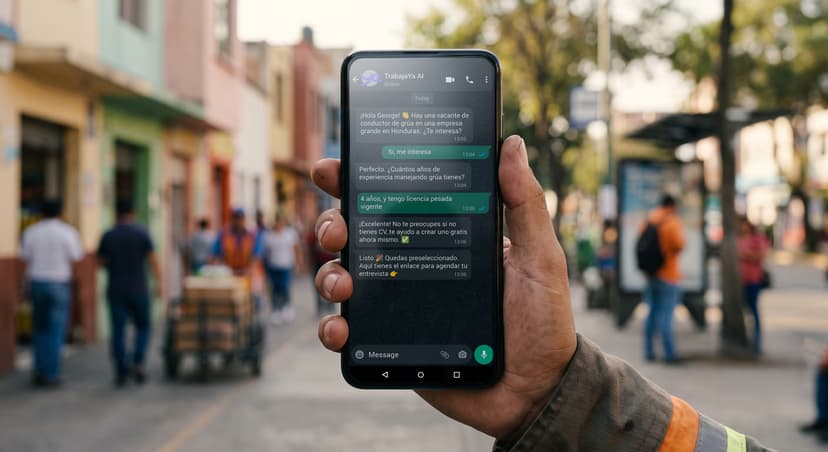
JobTech, TalentTech
TrabajaYa
What ifa blue-collar worker could find the right job, and an employer the right hire among hundreds of thousands, in a single message?

SportsTech, Athlete Platforms
VLT Gymnastics
What ifa gymnastics career didn't end the day the NCAA stops counting it?

Tech-for-Good, MigTech
Plataforma de Identidad Digital
What ifa refugee could prove who they are and unlock government services, without their full identity living on a government server?

PeaceTech, Civic Data
Social Cohesion Data Engine & Visualiser
What ifa peacebuilding team could see communal tension shifting in days, not read about it in a survey three months later?
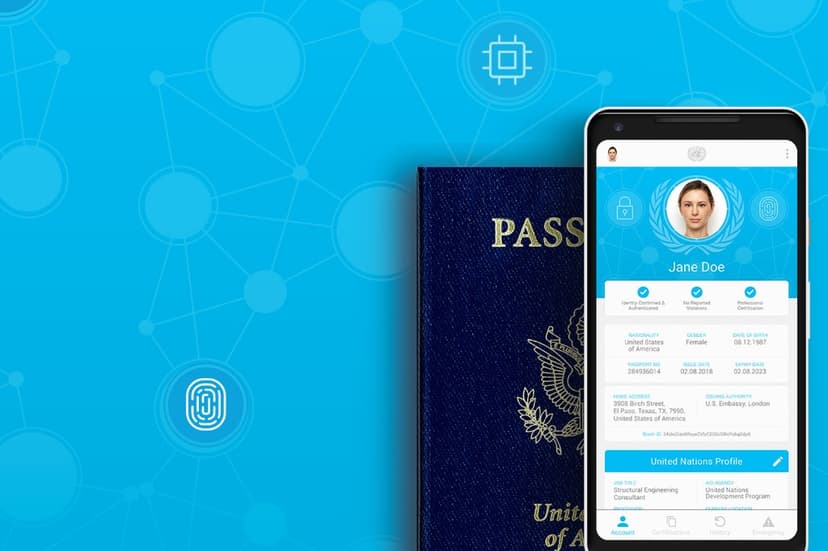
HumTech, Digital Identity
Humanitarian Passport
What ifan aid worker’s history could follow them across borders, and a host country could verify it at the checkpoint, offline, without trusting any single NGO?
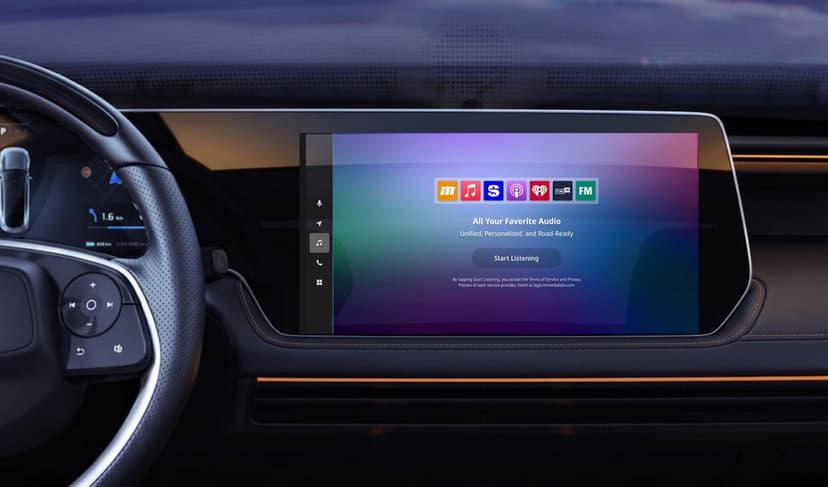
MediaTech, AutoTech
IM Media Project
What ifanyone could program a radio station like a seasoned music director just by describing it?