
JobTech, TalentTech
TrabajaYa
What if a blue-collar worker could find the right job, and an employer the right hire among hundreds of thousands, in a single message?
The Challenge
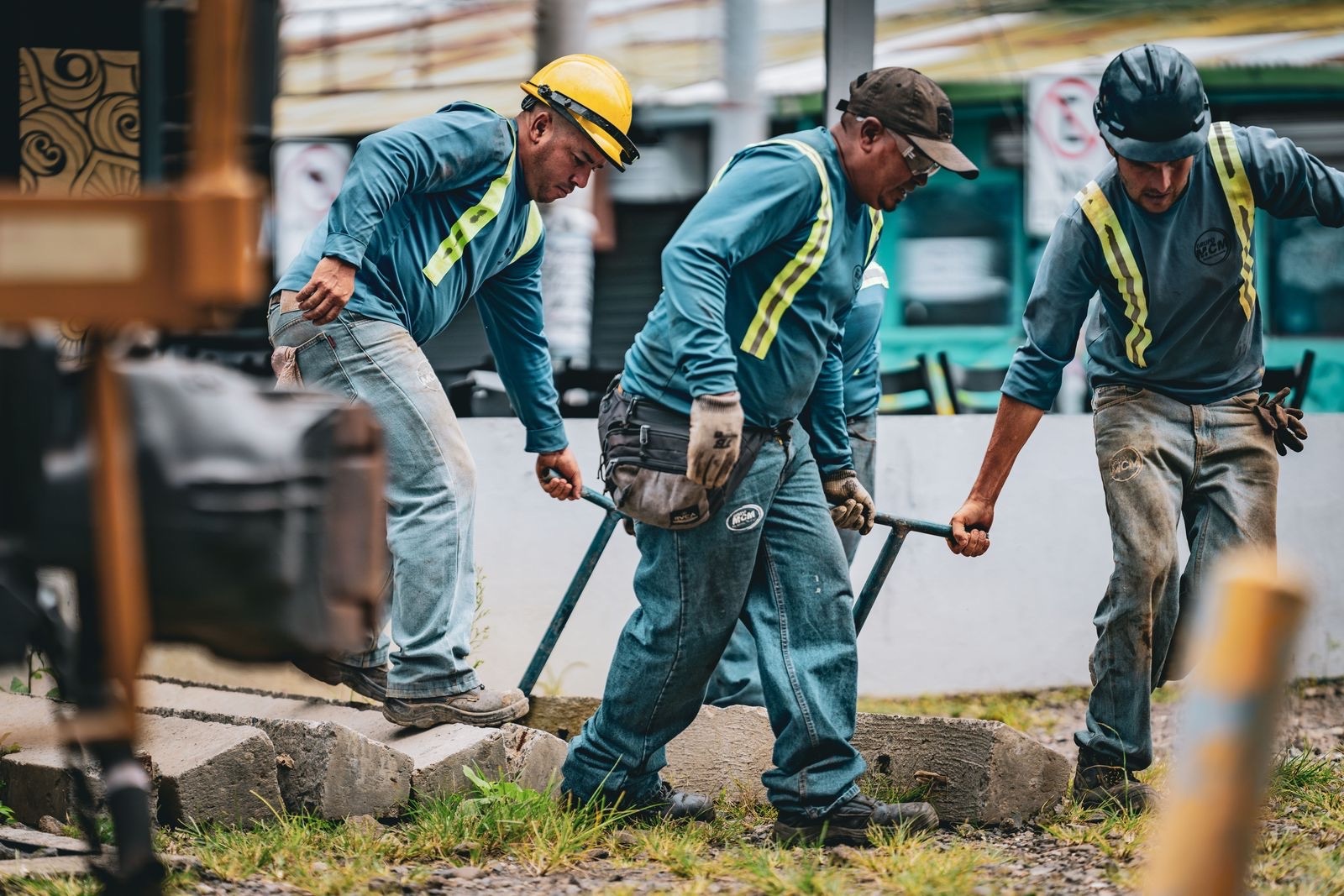
High-volume hiring for frontline and blue-collar roles in Latin America is broken on both sides. Employers post roles, receive thousands of applications, and lack the capacity to screen them meaningfully. Good candidates go uncontacted for weeks and eventually disappear. Recruiters drown in volume. Hiring managers make decisions on incomplete shortlists. The whole funnel leaks.


InnovArise Venture Studios had a vision for a product that could fix this: a WhatsApp-first hiring tool that would meet candidates where they already are and automate the screening and communication work that was breaking recruiters. They had the concept, a founding team, and early momentum. What they needed was a product and engineering partner who could turn that vision into a revenue-generating product quickly, without building or dedicating an entire in-house team at the riskiest stage of the venture.
The Constraints
The engagement carried the constraints of every early-stage venture: a short runway, an existing team to augment rather than replace, and a product that had to reach paying customers before the window closed.
Karakoram embedded with InnovArise's team, providing senior product and engineering leadership without the overhead of a full build team. The brief was twelve weeks to a minimally viable product. Not a prototype. A functioning, revenue-capable platform that real clients could run live hiring campaigns on.
That raised the bar in two directions. The AI at the core had to be built to production standards, not demo standards. And the whole product had to survive real operational conditions from day one: candidate drop-off, recruiters buried in volume, the chaos of running a live job fair, and non-technical operators who needed to act on the data themselves. It had to work in the field, not just in a walkthrough.
What We Built
Product Architecture & Technical Direction
Karakoram's Technical & Product Director led user story definition with the InnovArise team, gathered functional and compliance requirements, defined the technical architecture, and took ownership of the product backlog from day one. The team also introduced the sprint cadence and process infrastructure that the venture lacked, migrating from an unstructured task board into a properly triaged, groomed Jira environment within the first month. This wasn't process for its own sake. It was the scaffolding that let the AI build happen at speed without losing control of scope. The discipline was what made the speed safe.
The AI Hiring Pipeline
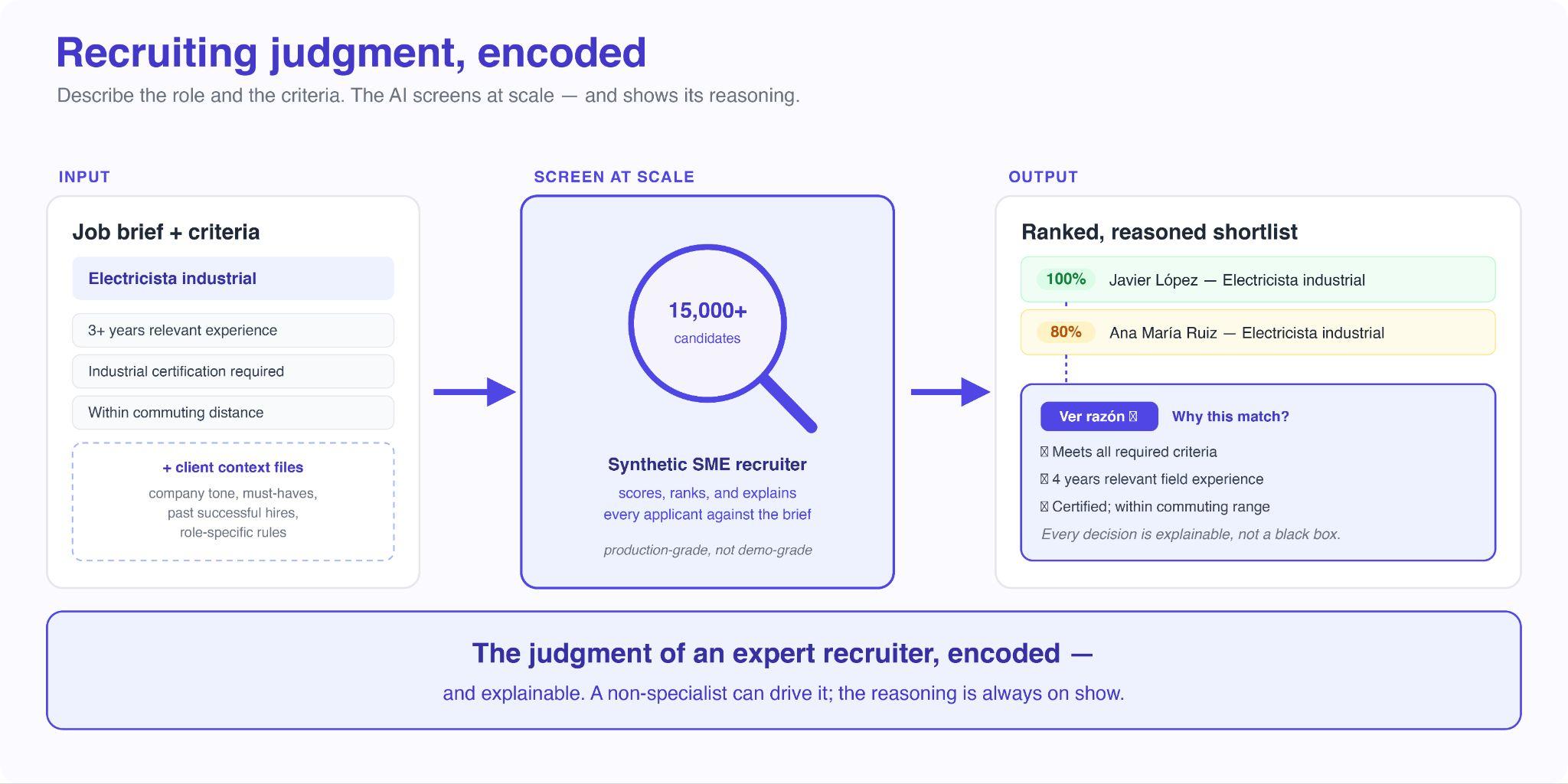
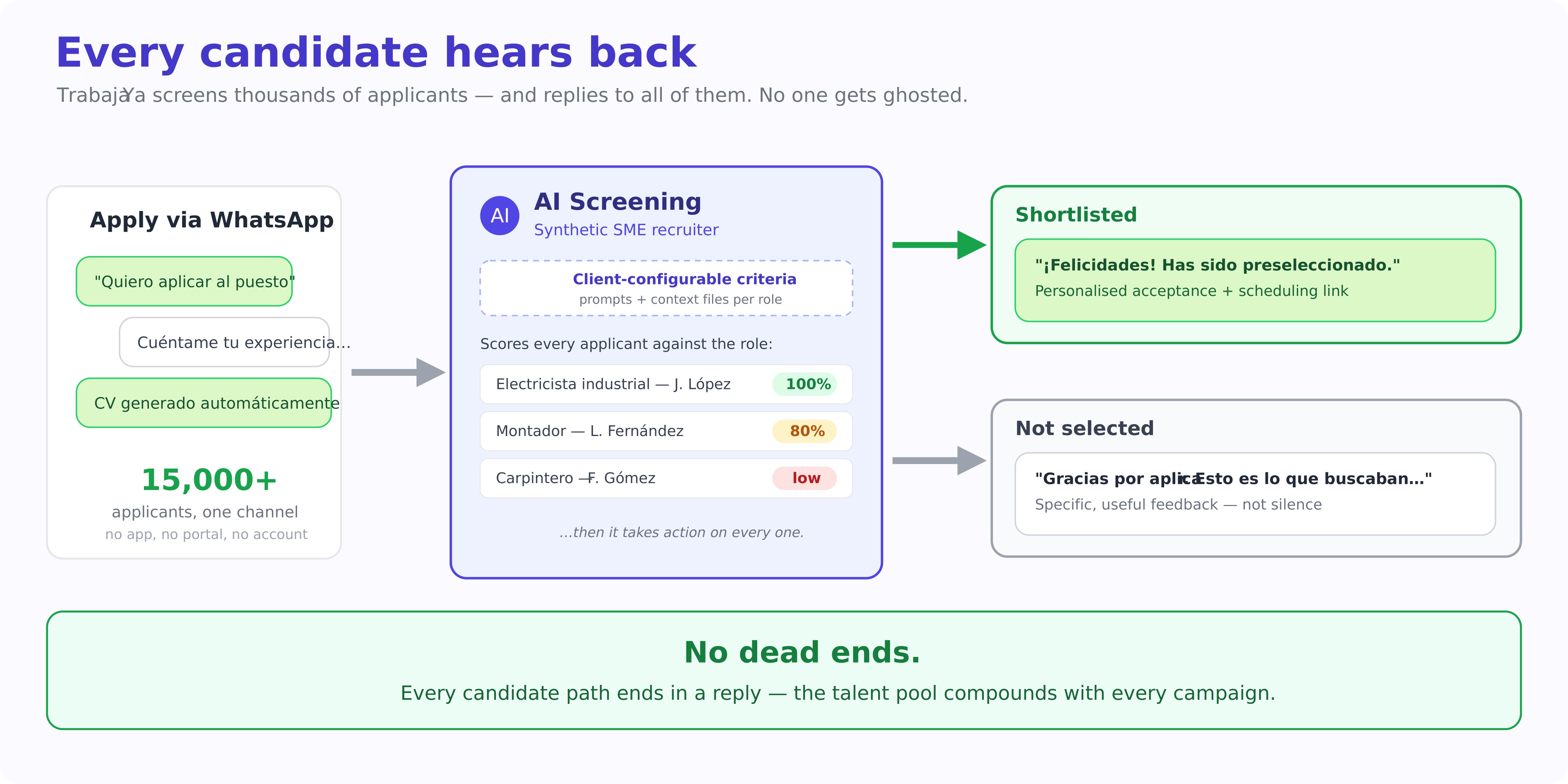
At the core is an AI layer that works as a synthetic SME recruiter, screening applicants at scale against job criteria defined in client-configurable prompts and context files, then taking action on what it finds. Shortlisted candidates get a personalised acceptance with a scheduling link. Rejected candidates get specific, useful feedback on how they compared to successful applicants. No one gets ghosted. Every candidate hears back.
The messages are tailored by design to the applicant, their profile, and the role. The pipeline handles messy edge cases with fallback logic and was built into InnovArise's existing stack rather than bolted on as a standalone demo. The AI was not a novelty sitting beside the process. It was embedded in how the platform actually ran.
The WhatsApp Candidate Experience
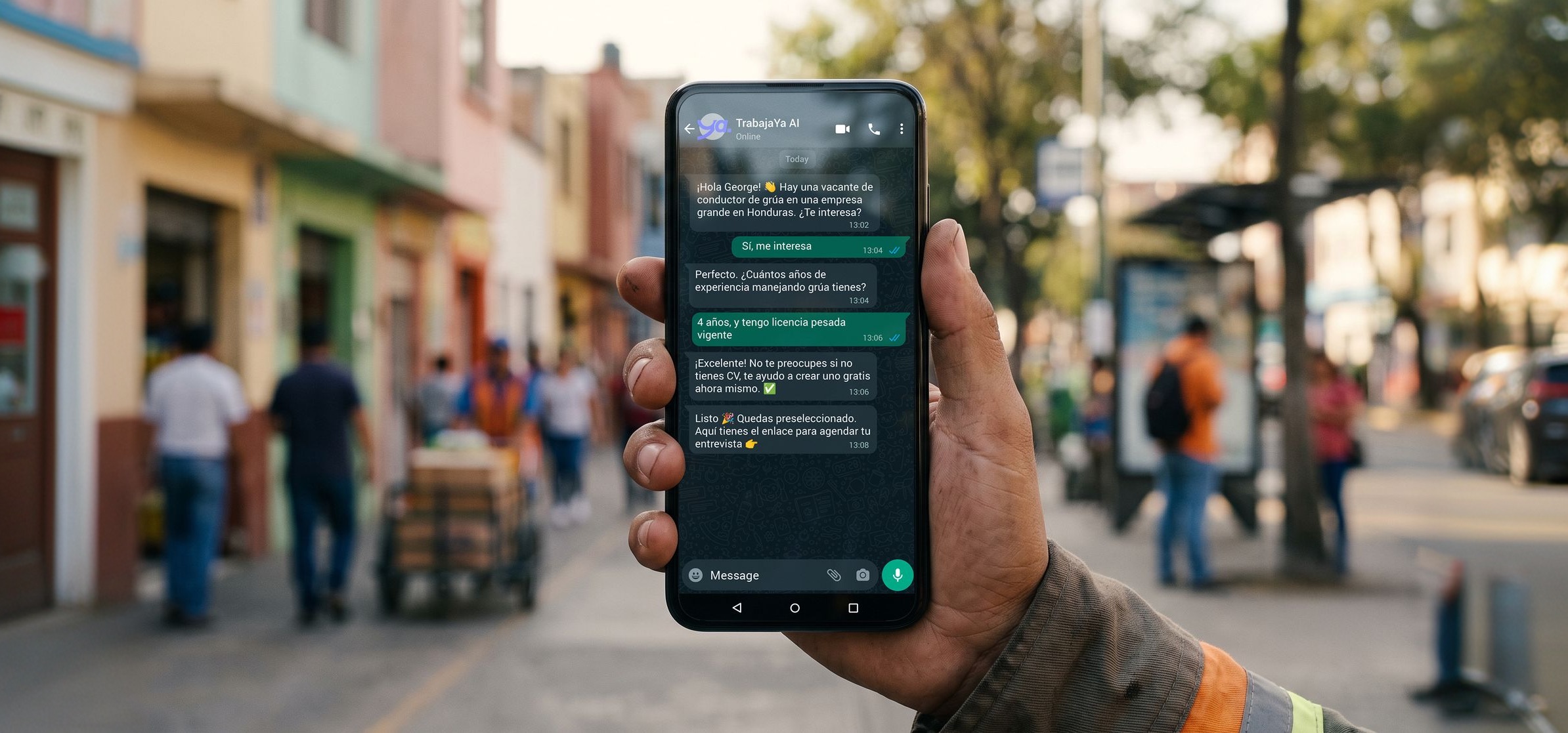
Candidates apply through WhatsApp: the communication channel already in daily use across the LATAM labour market. A conversational flow explains the role, captures their information, and generates a free CV for those without one. No new app, no account, no portal to learn, just a medium they already trust. That removes the friction that kills traditional application funnels. On the other side, hiring managers receive a qualified shortlist and schedule interviews on the platform. What started as a chatbot grew into a real hiring operation: fair management, candidate follow-up, recruiter controls, reporting.
Shipping Quick Wins and a Wayfinding Mentality
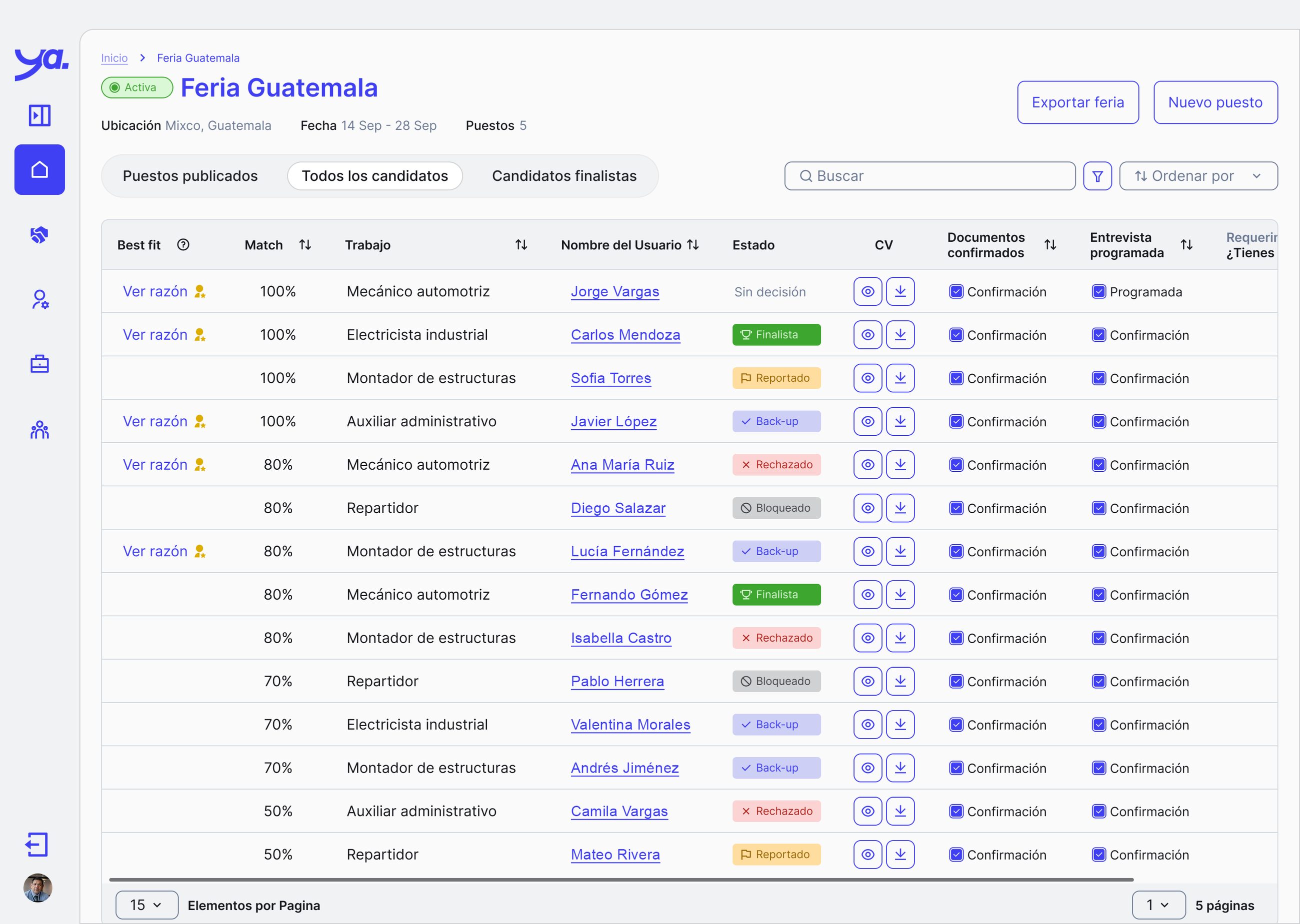
The clearest example of how Karakoram works came under live pressure. All candidate data was stored in a structured database, but only engineers could read it, and the operations team needed it daily to chase candidates and act on drop-offs. The textbook answer was a full admin dashboard. That would have taken weeks, which the venture didn't have.
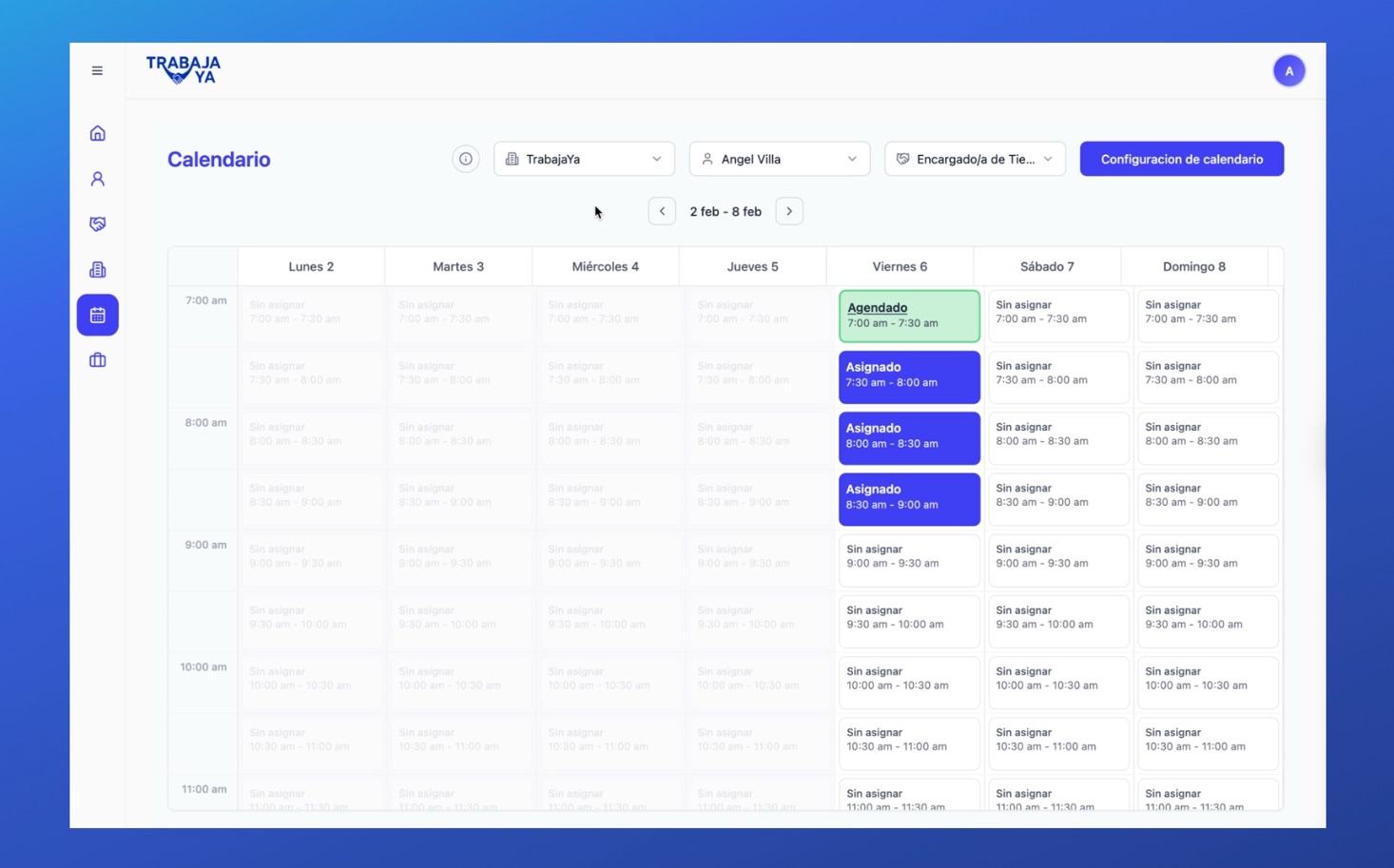
So we built for the quick wins first. A pipeline that copied candidate, application, and fair data into a live, human-readable system the operators could use immediately. It was not the permanent solution. It was the right one for that moment: it unlocked the data, enabled re-engagement sooner, and let non-technical staff act on real information without waiting for the perfect tool. Build narrow to prove the value. Build wide once it is earned.
The Outcome
A production-grade hiring platform with paying clients within two months of kickoff. Eight clients onboarded inside six months, from a standing start. Every candidate heard back. The talent pool is compounded with every campaign.
TrabajaYa did not just launch. It survived contact with real users: significant early revenue, live job fairs running, recruiters depending on it, candidates moving through the funnel in real time. Actual venture growth signals. Karakoram took the venture from concept to paying customers in two months, then kept it stable under live client pressure as it scaled to its first clients.
The proof was in what came next. Of all the ventures in InnovArise's portfolio, TrabajaYa was the one selected for follow-on funding, chosen on the strength of a working product, real paying customers, and a clean technical foundation its team could build on.
"Karakoram helped us get our product off the ground when we didn’t know how to build one with the budget and uncertainty we had at the time. Doing it ourselves would have meant hiring several people, which is expensive and slow, and even then there’s no guarantee they’ll perform the way you need while the business is still at the MVP stage. With Karakoram, we got the stability, velocity and commitment we needed without any of that. They took us from MVP to V1 in just a few months, cost-effectively, and that progress is what helped us secure our next round of funding."
Continue exploring

SportsTech, Athlete Platforms
VLT Gymnastics
What ifa gymnastics career didn't end the day the NCAA stops counting it?
Tech-for-Good, MigTech
Plataforma de Identidad Digital
What ifa refugee could prove who they are and unlock government services, without their full identity living on a government server?
PeaceTech, Civic Data
Social Cohesion Data Engine & Visualiser
What ifa peacebuilding team could see communal tension shifting in days, not read about it in a survey three months later?
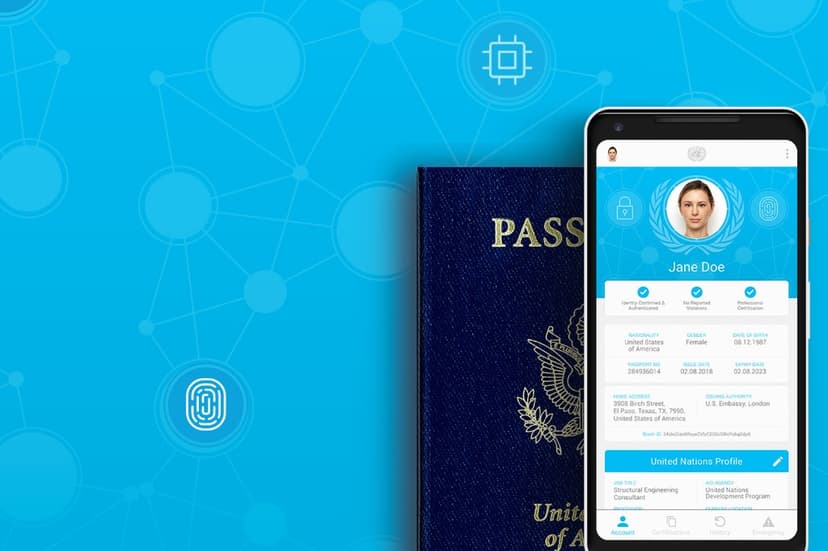
HumTech, Digital Identity
Humanitarian Passport
What ifan aid worker’s history could follow them across borders, and a host country could verify it at the checkpoint, offline, without trusting any single NGO?
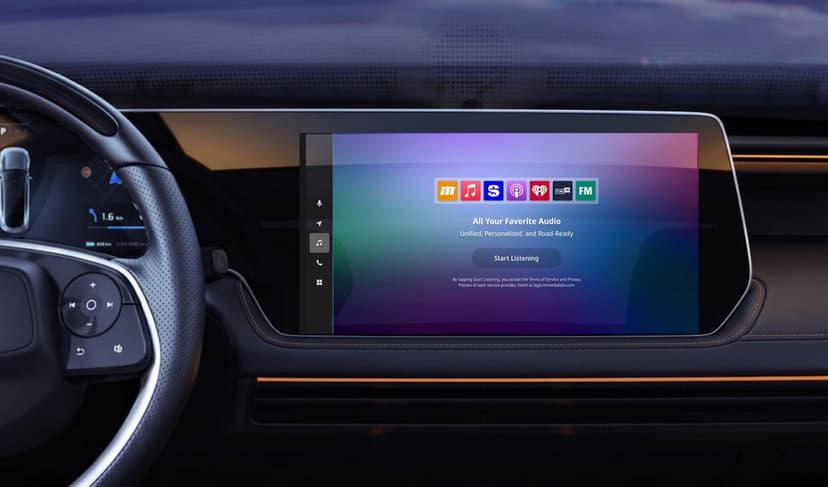
MediaTech, AutoTech
IM Media Project
What ifanyone could program a radio station like a seasoned music director just by describing it?